
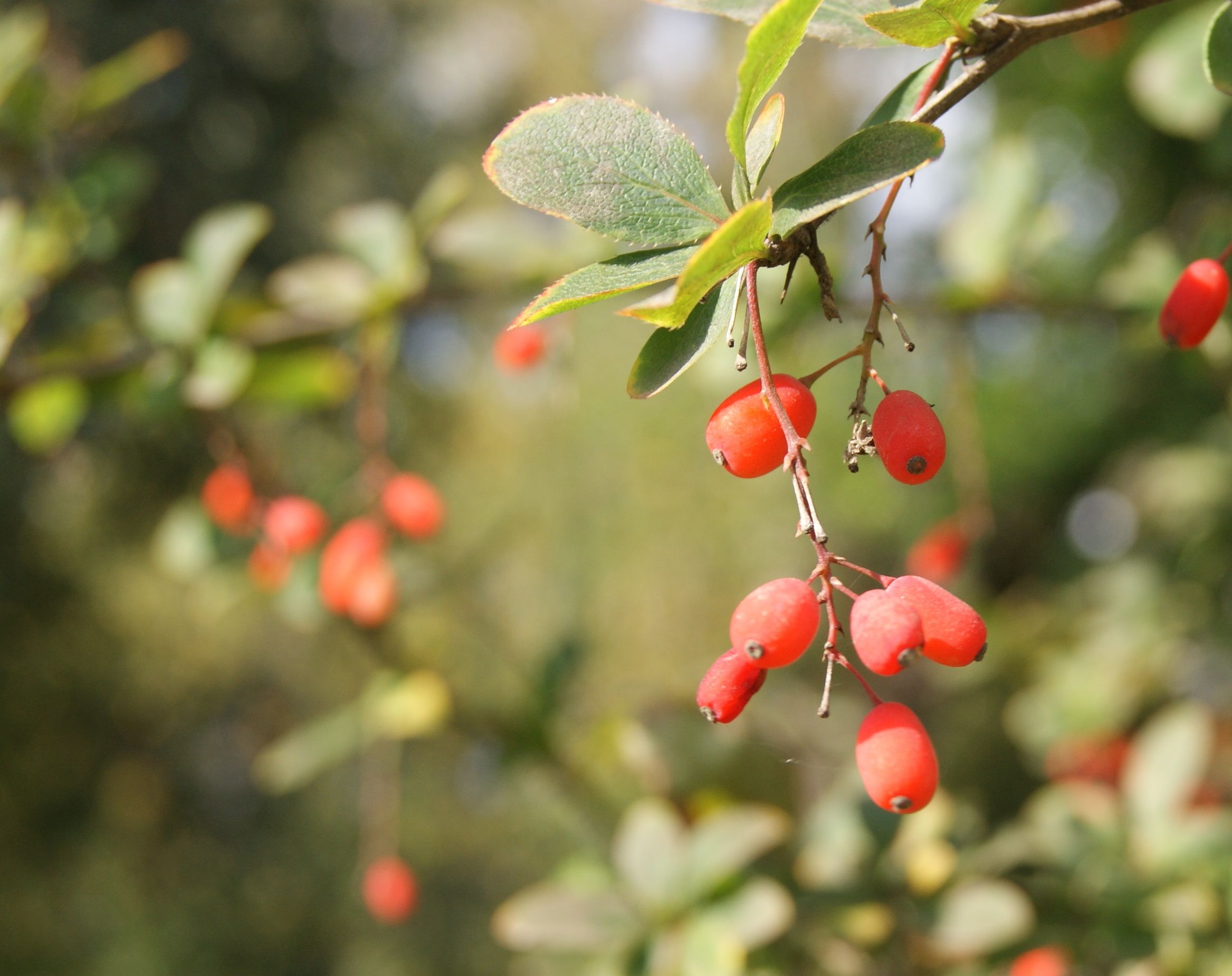
Berberine has been in great demand due to its Virucidal effect.
Anti-influenza Activity of Berberine Improves Prognosis by Reducing Viral Replication…
Berberine, a natural isoquinoline alkaloid isolated from the berberis species, has a wide array of biological properties such as anti-inflammatory, antibacterial, antifungal, and antihelminthic effects. We evaluated the antiviral effect of berberine against influenza A/FM1/1/47 (H1N1) in vivo and in vitro. The results showed that berberine strongly suppressed viral replication in A549 cells and in mouse lungs. Meanwhile, berberine relieved pulmonary inflammation and reduced necrosis, inflammatory cell infiltration, and pulmonary edema induced by viral infection in mice when compared with vehicle-treated mice.
Berberine suppressed the viral infection-induced up-regulation of TLR7 signaling pathway, such as TLR7, MyD88, and NF-κB (p65), at both the mRNA and protein levels. Furthermore, berberine significantly inhibited the viral infection-induced increase in Th1/Th2 and Th17/Treg ratios as well as the production of inflammatory cytokines. Our data provide new insight into the potential of berberine as a therapeutic agent for viral infection via its antiviral activity.
Reference
Anti-influenza Activity of Berberine Improves Prognosis by Reducing Viral Replication in Mice. Phytother Res, 32 (12), 2560-2567 Dec 2018 DOI: 10.1002/ptr.6196
In Vivo and in Vitro Antiviral Effects of Berberine on Influenza Virus…
Berberine showed inhibitory effects on cytopathogenic effects and neuraminidase activity of virus, with the therapeutic index 9.69. In vivo, berberine decreased mice mortality from 90% to 55%, reduced virus titers in the lungs on day 2 postinfection (P<0.05). The lung histology scores were 1.50 ± 0.67, 4.50 ± 1.00, and 5.50 ± 1.00 in the berberine group on days 2, 4, and 6, respectively, which were significantly reduced compared to 2.17 ± 0.22, 6.83 ± 0.44, and 8.50 ± 0.33 in the infected group (P<0.05). The productions of NO and iNOS were repressed by berberine compared with those in the infected group (P<0.01). The transcription and expression of TNF-α were inhibited by berberine on day 4 (P<0.01) and day 6 (P<0.05), and those of MCP-1 were inhibited on day 6 (P<0.01) compared with the infected group.
Berberine exhibited antiviral effects on the influenza virus both in vitro and in vivo. The possible therapeutic mechanism of berberine on influenza-induced viral pneumonia might be inhibiting the virus infection, as well as improving the pathogenic changes by repressing inflammatory substances release.
Reference
In Vivo and in Vitro Antiviral Effects of Berberine on Influenza Virus. Chin J Integr Med, 17 (6), 444-52 Jun 2011 DOI: 10.1007/s11655-011-0640-3
Inhibition of Respiratory Syncytial Virus Replication and Virus-Induced p38 Kinase Activity by Berberine…
Recent studies have shown that p38 mitogen-activated protein kinase (MAPK) activity is implicated in infection by and replication of viruses such as RSV and the influenza virus. Because berberine has previously been implicated in modulating the activity of p38 MAPK, its effects on RSV infection and RSV-mediated p38 MAPK activation were examined. Replication of RSV in epithelial cells was significantly reduced by treatment with berberine.
Berberine treatment caused decrease in viral protein and mRNA syntheses. Similar to previously reported findings, RSV infection caused phosphorylation of p38 MAPK at a very early time point of infection, and phosphorylation was dramatically reduced by berberine treatment. In addition, production of interleukin-6 mRNA upon RSV infection was significantly suppressed by treatment with berberine, suggesting the anti-inflammatory role of berberine during RSV infection.
Taken together, Shin et al., (2015) showed that berberine, a natural compound already proven to be safe for human consumption, suppresses the replication of RSV. In addition, the current study suggests that inhibition of RSV-mediated early p38 MAPK activation, which has been implicated as an early step in viral infection, as a potential molecular mechanism.
Reference
Inhibition of Respiratory Syncytial Virus Replication and Virus-Induced p38 Kinase Activity by Berberine. Int Immunopharmacol, 27 (1), 65-8 Jul 2015 DOI: 10.1016/j.intimp.2015.04.045