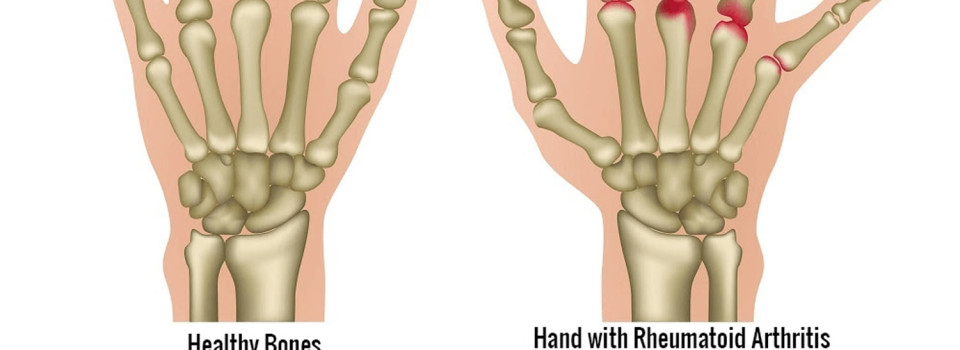
Rheumatoid arthritis (RA) is a long-term, progressive, and disabling autoimmune disease that can cause joint pain and damage throughout your body.
Rheumatoid arthritis (RA) usually affects the hands and feet first, but it can occur in any joint. The joint damage that RA causes usually happens on both sides of your body. So if a joint is affected in one of your arms or legs, the same joint in the other arm or leg will probably be affected, too. This is one way that doctors distinguish RA from other forms of arthritis, such as osteoarthritis (OA).
Though symptoms may stop for extended periods, joint problems caused by RA will usually get worse over time. That’s why early treatment is so important to help delay serious joint damage. If you’re experiencing any symptoms or have concerns about RA, talk to your doctor.
Rheumatoid arthritis causes
The cause of RA isn’t known. However, certain factors seem to have a role in increasing the risk of developing RA or triggering its onset. Factors that increase risk of RA include:
- being a woman
- having a family history of RA
Factors that may trigger onset of RA include:
- exposure to certain types of bacteria, such as those associated with periodontal disease
- having a history of viral infections like infection with the Epstein-Barr virus, which causes mononucleosis
- trauma or injury, such as bone breakage or fracture, dislocation of a joint, and ligament damage
- smoking cigarettes
- obesity
- food allergies and /or sensitivities
- heavy metal toxicity
- stress
- inadequate amounts of sleep
- fungal infection especially in the gut
Rheumatoid arthritis symptoms
RA symptoms, which can occur throughout the body, include:
- joint pain
- joint swelling
- joint stiffness
- loss of joint function
Symptoms can vary from mild to severe. It’s important not to ignore your symptoms, even if they come and go
Rheumatoid arthritis diagnosis
Since no single test can confirm a diagnosis of RA, your doctor or rheumatologist may use several different types of tests. They may test your blood for certain substances like antibodies, or check the level of certain substances like acute phase reactants that are elevated during inflammatory conditions. These can be a sign of RA and help support the diagnosis.
They may also request certain imaging tests. Tests such as ultrasonography, x-ray exams, and magnetic resonance imaging (MRI) not only show if damage from RA has been done to your joints but also how severe the damage is.
Blood test for rheumatoid arthritis
There are several types of blood tests that help your doctor or rheumatologist determine whether you have RA. These tests include:
- Rheumatoid factor test: This blood test checks for a protein called rheumatoid factor. High levels of rheumatoid factor are associated with autoimmune diseases, especially RA.
- Anticitrullinated protein antibody test (anti-CCP): This test looks for an antibody that’s associated with RA. People who have this antibody usually have the disease. However, not everyone with RA tests positive for this antibody.
- Antinuclear antibody test: This tests your immune system to see if it’s producing antibodies. Your body may make antibodies as a response to many different types of conditions, including RA.
- Erythrocyte sedimentation rate: This test helps determine the degree of inflammation in your body. The result tells your doctor whether inflammation is present. However, it doesn’t indicate the cause of the inflammation.
- C-reactive protein test: A severe infection or significant inflammation anywhere in your body can trigger your liver to make C-reactive protein. High levels of this inflammatory marker are associated with RA.
Types of rheumatoid arthritis
There are several different types of RA. Knowing which type you have may help your doctor provide the best type of treatment for you. Types of RA include:
- Seropositive RA: If you have seropositive RA, you have a positive rheumatoid factor blood test result. This means you have the antibodies that cause your immune system to attack your joints.
- Seronegative RA: If you have a negative rheumatoid factor blood test result and a negative anti-CCP blood test result, but you still have RA symptoms, you may have seronegative RA. You may eventually develop antibodies, changing your diagnosis to seropositive RA.
- JIA (juvenile idiopathic arthritis): Juvenile idiopathic arthritis refers to RA in people younger than 17 years of age. The condition was previously known as JRA (juvenile rheumatoid arthritis). The symptoms are the same as those of other types of RA, but they may also include eye inflammation and issues with physical development.
Seropositive rheumatoid arthritis
Seropositive RA is the most common type of RA. This type of arthritis may run in families. Seropositive RA may come with more severe symptoms than seronegative RA. Presenting symptoms of seropositive RA can include:
- morning stiffness which lasts 30 minutes or longer
- swelling and pain in multiple joints
- swelling and pain in symmetrical joints
- rheumatoid nodules
- fever
- fatigue
- weight loss
RA isn’t always confined to the joints and some people with seropositive RA can experience inflammation in the eyes, salivary glands, nerves, kidneys, lungs, heart, skin, and blood vessels.
The difference between rheumatoid arthritis and osteoarthritis
Like RA, people with OA can experience painful and stiff joints that can make moving around difficult. People with OA may have joint swelling after extended activity, but OA doesn’t cause any significant inflammatory reaction that typically results in redness of the affected joints.
Unlike RA, OA isn’t an autoimmune disease. It’s related to the natural wear and tear of the joints as you age or it can develop as a result of trauma. OA is most often seen in older adults. However, it can sometimes be seen in younger adults who overuse a particular joint — such as tennis players and other athletes — or those who have experienced a severe injury.
RA is an autoimmune disease. The joint damage from RA isn’t caused by normal wear and tear but by your body attacking itself
Is rheumatoid arthritis hereditary?
Rheumatoid arthritis isn’t considered a hereditary disease, yet it does appear to run in families. This may be due to environmental causes, genetic causes, or a combination of both. If you have family members who have or have had RA, talk to your doctor, especially if you have any symptoms of persistent joint pain, swelling, and stiffness, unrelated to overuse or trauma.
Rheumatoid arthritis treatment and management
- Medications such as nonsteroidal anti-inflammatory drugs(NSAIDs) , corticosteroids, acetaminophen and Disease-modifying anti rheumatic drugs (DMARDs)
- Nutraceutical and herbal protocols to reduce inflammation
- TCM
- Cannabis
- CBD oil
- Acupuncture
- Ozone therapy
- Intravenous drips
- Dietary changes based on delayed food allergy testing for food sensitivities or allergies
- Fasting protocols
- Specific types of exercise
- Heavy metal chelation
- Detoxification protocols e.g. colon hydrotherapy, juicing etc
- Restoration of normal gut health
Please call Karin on 011 433 00 66 or 011 0271190 to set up an appointment.